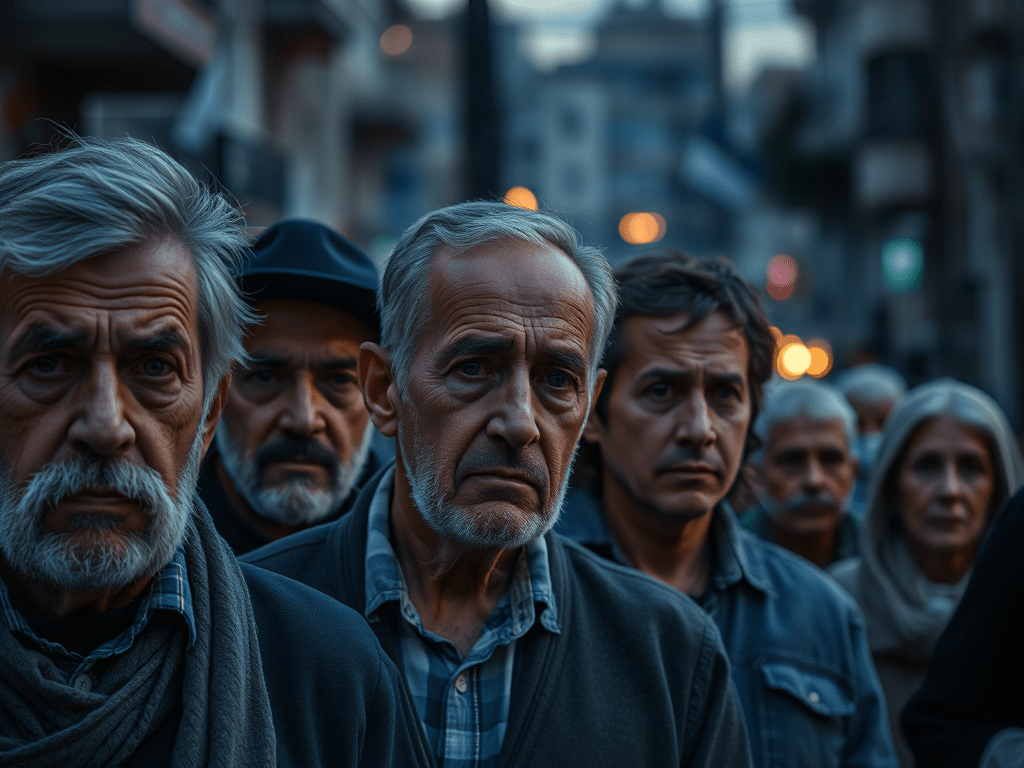
Introduction: Anxiety in the Air
Walk down a street in Jerusalem or Tel Aviv lately, and there’s a tension you can almost touch. Older folks shake their heads, remembering wars past. The younger generation watches news updates nervously, WhatsApp threads full of wild rumors and political memes. It isn’t just fear of rockets or headlines about another military operation; there’s something deeper this time. Ask around, and you’ll hear the same thing: “We’re used to living on the edge—but these days, the edge feels sharper than ever.”
A War Nobody Wanted, But Everyone Saw Coming
It started like a hundred times before—rumors of military buildups, politicians warning on TV. But what happened in June changed everything. Israeli jets roared east, striking deep inside Iran, hitting what officials said were nuclear and military targets. The Iranian response came quick and terrifying: hundreds of missiles and drones lit up the sky, reaching Israeli cities in a show of force few could have predicted.
People in the Negev said the night sky looked like it was on fire. In Tehran, air raid sirens sent whole neighborhoods underground. On both sides, families huddled together, parents trying to sound braver than they felt. If you’ve ever seen that kind of fear on someone’s face, it sticks with you.
Markets panicked. Oil prices shot up. Flights were canceled or rerouted. Schools closed in parts of Israel, not because a missile was definitely coming, but because nobody could promise one wouldn’t. The Israeli foreign minister went on TV, vowing to strike back even harder if Iran fired again. Across the region, everyone was bracing for what might come next.
Political Chaos: The Knesset at War With Itself
If you think the enemy is only outside the walls, you haven’t been watching Israeli politics. The Knesset—a place known for shouting matches—reached new levels of drama this spring. A hotly debated attempt to dissolve parliament fell apart by just a few votes. At the heart of it? The decades-old fight about whether ultra-Orthodox (Haredi) men should be forced to serve in the army.
You’d be surprised how personal this debate feels. Secular Israelis with kids on the front lines are openly angry, asking why their neighbors get a pass. Haredi leaders fire back that prayer protects Israel more than tanks ever could. The prime minister is caught in the middle, trying to keep his shaky coalition from collapsing while not angering anyone enough to bring it all down.
Scandal: When the Corruption Hits Home
On top of war and politics, Israel is reeling from a corruption scandal dubbed “Qatargate.” The story, as it’s coming out, is that top aides to the prime minister might have taken hush money from Qatari sources to shape how the media covered the government—even during wartime. The investigation is just starting, but people are already disgusted. It feels, to many, like a betrayal right when the country needs real leadership the most.
For some Israelis, it’s nothing new. “Every government has its dirty secrets,” said one old-timer outside a café in Haifa. “But if this is true, it’s different. This is about selling us out for cash, while our boys are fighting.”
World Pushback: Ministers Sanctioned, Image Tarnished
International patience is wearing thin, too. Several Western countries—including the UK, Canada, Australia, and Norway—have slapped sanctions on two far-right Israeli ministers, citing their inflammatory rhetoric and actions against Palestinians. Some Israelis see this as an attack on their democracy; others think it’s a wake-up call that the world is losing patience with the current government’s hard line.
The response at home is split. On the right, there’s anger: “We pick our leaders, not foreigners.” On the left, frustration: “Maybe now they’ll listen.” The prime minister went on TV again, calling the sanctions antisemitic and vowing that Israel wouldn’t cave to outside pressure.
Maps and Missteps: A Diplomatic Snafu
It wasn’t all bombs and politics. In a bizarre twist, Israel’s own military published a map during the recent conflict that showed Jammu & Kashmir as part of Pakistan, angering longtime ally India. A quick apology followed, but it was a reminder of how even small mistakes can ignite big problems in this part of the world.
The Human Side: Beyond Numbers and Headlines
It’s easy to get lost in numbers: rockets, casualties, polling data. But the real cost is harder to measure. Kids missing weeks of school. Teenagers sleeping in bomb shelters. Parents working two jobs, still unable to promise safety. In Gaza, the suffering continues, too—blockades, airstrikes, lives uprooted. In the north, everyone’s watching Hezbollah, wondering if another front is about to explode.
Across Israel and its neighbors, the mood is a mix of exhaustion and defiance. Some talk about leaving. Others dig in, insisting this is just another storm to ride out.
What’s Really Different This Time?
It’s not just another “cycle of violence.” What makes 2024 feel so different is that everything’s colliding at once:
- The Iran-Israel conflict is now out in the open.
- The government looks shakier than ever.
- Major allies are starting to distance themselves.
- Nobody agrees on what to do next, except that something has to change.
Table: Flashpoints in the Crisis
| Issue | What Happened | Why It Matters |
|---|---|---|
| Israel–Iran strikes | Direct missile and drone attacks between countries | Risk of regional war, global economic shock |
| Knesset drama | Parliament nearly dissolved over army draft law | Exposes deep rifts, risks government collapse |
| Qatargate | Alleged Qatari bribes to top officials | Trust in leadership at all-time low |
| Minister sanctions | Western governments sanction Israeli far-right leaders | Diplomatic isolation, possible economic fallout |
| Map gaffe | IDF map showed Kashmir as Pakistan | Damaged ties with India, diplomatic headache |
Voices From the Street
“We’ve always had enemies,” says Matan, a father of three in Ashkelon. “But I never thought we’d be this divided inside. The anger, the fear—it’s like we’re waiting for something to break.”
“Does anyone in power even care about us anymore?” asks Sara, a young student in Jerusalem. “They fight, we pay the price.”
The World Reacts
World leaders are, as usual, calling for restraint. But few Israelis trust those words mean much anymore. Oil prices are up, flights are down, and no one is sure where the next headline will come from.
If you’re in Europe or the Gulf, you’re watching closely—every missile, every vote in the Knesset, every scandal could change your energy bill, your company’s bottom line, or even your city’s security.
What Now? No Easy Answers
Maybe a new election is coming. Maybe another war. Maybe, just maybe, a chance for something new. Most people aren’t betting on miracles. They’re just hoping tomorrow will be a little less tense than today.
References & Further Reading
For live news and in-depth global analysis:
https://www.welt.de
For business and world affairs reporting:
https://www.wsj.com
For European and global perspectives:
https://www.huffingtonpost.es
For trusted international news coverage:
https://www.bbc.com
For the latest updates in world news:
https://www.reuters.com
For major Middle East coverage and analysis:
https://www.aljazeera.com
For comprehensive UK/world news:
https://www.theguardian.com
 Private Israel Tours & Holy Land Travel